

Consult JC

7 Zoho Books Tips That Will Save Your Finance Team Hours

7 Zoho Books Tips That Will Save Your Finance Team Hours

Zoho Books demo with Kyle Phillips

Let’s be honest: most of us open Zoho Books, do the thing we came to do, and close it again. Quote, invoice, done. But there’s a whole layer of time-savers sitting quietly in the settings that a lot of people never switch on.

In our latest demo, Kyle Phillips from Consult JC runs through Zoho Books using Jenny’s Bakes, a made-up bakery, and along the way he shares some really practical tips. We’ve pulled out our favorites so you can try them in your own account this week.

Grab a coffee (or a croissant, in Jenny’s honor) and let’s get into it.

Tip 1: Stop typing the same details twice

If you’re copying customer and item details from a quote into a sales order, and then again into an invoice, you’re doing more work than you need to. Let each step build on the last. Convert your quote into a sales order, use a reference lookup to pull in the original quote details, and add custom fields for the information your business actually tracks. Fill it in once, and it follows the deal all the way to the invoice.

Tip 2: Let Zia tell you who owes you money

You shouldn’t have to dig through a list of invoices to work out which ones are late. Head to the AI Control Center and switch on Zia invoice insights. Zia will flag overdue and unpaid invoices for you, so you can see where to focus the moment you log in.

Tip 3: Put payment reminders on autopilot

Chasing payments is nobody’s favorite job, and it’s the first thing to slip when things get busy. Set up automatic payment reminders and Zoho Books will nudge late-paying customers for you. It’s polite, it’s consistent, and nobody has to remember to do it.

Tip 4: Teach Zoho Books your bank fees once

If you’re categorizing the same bank fee every single month, here’s your sign to create a bank rule. Tell Zoho Books once how to handle a transaction, and it’ll categorize the matching ones automatically from then on. Your month-end reconciliation will thank you.

Tip 5: Have your P&L land in your inbox

Instead of logging in to pull the same numbers every month, customize your Profit & Loss report so it shows what you actually care about, then schedule it to arrive by email. It’s a small change, but it means the people making decisions always have the latest picture without asking for it.

Tip 6: Switch on Fixed Assets (Kyle’s top tip)

This is the one Kyle gets most excited about, and for good reason. Enable Fixed Assets and your bills for things like equipment can automatically create assets in Zoho Books. No separate spreadsheet, no forgetting to update the asset register. It just happens as part of paying the bill.

Tip 7: Give the Co-Create Agent a spin

If you like trying new things, the Co-Create Agent is worth a look. It’s still in beta, but it can help you draft invoices faster, and it’s a nice glimpse of how AI is starting to take over the routine data entry none of us enjoy.

Not sure where to start?

Pick one. Seriously, just one. If late payments keep you up at night, start with Zia insights and reminders. If month-end drags on, start with bank rules. Every tip here takes a few minutes to set up and keeps saving you time long after.

Watch Kyle walk through it

Some of these are much easier to follow when you can see them on screen. Watch How to Use Zoho Books: Quotes, Invoices, Banking & Fixed Assets on the Consult JC YouTube channel. It’s split into chapters, so you can skip straight to the tip you want. And while you’re there, hit subscribe so you don’t miss the next one.

Want a hand setting it up?

Whether you’re new to Zoho Books or you’ve been using it for years and suspect you’re missing out, we’d love to help you set it up around the way you work. Book a free consultation at consultjc.com or drop us a line at info@consultjc.com.
Where Best Practice Ends and Your Context Begins: Lessons from Tina Diodati on After the Demo

Where Best Practice Ends and Your Context Begins: Lessons from Tina Diodati on After the Demo

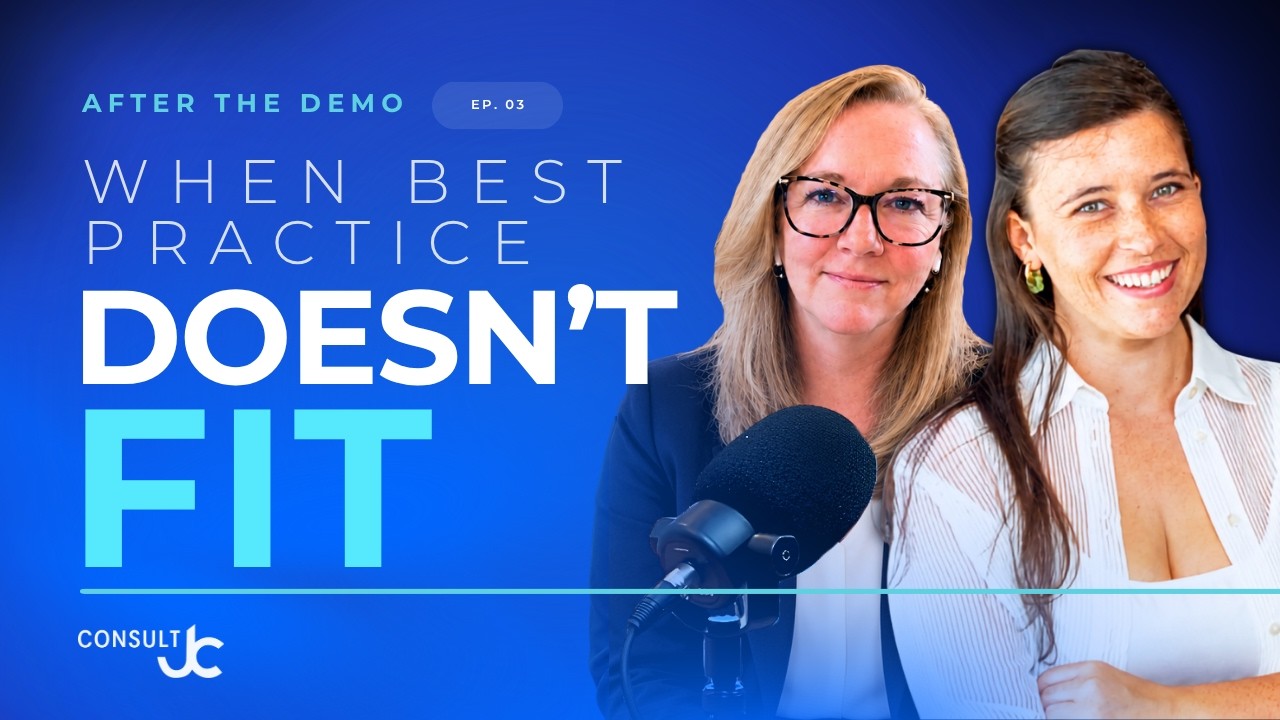
After the Demo podcast thumbnail: Where Best Practice Ends and Your Context Begins, with guest Tina Diodati

Best practice exists for a reason. It helps businesses move faster, make informed decisions and avoid reinventing the wheel. But what happens when the standard approach no longer fits your business?

In the latest episode of After the Demo, host Christie Fourie welcomes our very first guest: Christina “Tina” Diodati, President and Managing Partner at Property Works. Tina is leading a technology and business transformation from inside her own organization, and she has lived these decisions in both a large enterprise and a smaller, fast-moving company.

Every transformation is a mix of out-of-the-box software and something more tailored. Christie asked Tina for three stories to unpack where each one belongs.

Story 1: When the default was the right answer

Before joining Property Works, Tina worked for an organization with a large salesforce. For years, the team ran on a homegrown CRM built by one of its own end users. It was a great piece of innovation, and because a colleague built it, people adopted it naturally.

The trouble came when the business outgrew it. The company moved to a major CRM platform with good practice built in, but end users expected it to work exactly like the old tool. So it was customized, heavily. A couple of years in, leadership realized they had taken an industry-standard solution and compromised their ability to scale it or adopt new releases.

The fix was a hard one: step back from the customization and return to something much closer to out-of-the-box, even after a significant investment. Tina credits the leadership team’s courage in making that call sooner rather than later.

Christie’s take: process takes years to mature. If you customize to every person’s idea of how work should get done, you can quickly end up in deep water.

Story 2: When the plan needed to be questioned

The second story is happening right now at Property Works. The company is modernizing its platform to serve current clients better and reach a broader market. With a small but highly experienced IT team, the decision was made to build it internally.

About six months in, the reality was clear. The team could not run day-to-day operations, build a new platform and keep pace with AI all at once, at any reasonable velocity. Property Works made the difficult decision to outsource part of the build, and its technology leader took on a different role than first planned.

The change cost some time, but the new team was up and running in about six weeks. Looking back, Tina sees it as a smart choice for the whole business, not just the build. It freed up capacity for work on workforce management and client retention, and it took pressure off a leader who already carried a lot.

Christie points out how relevant this is in the age of AI, when many companies are tempted to self-implement or “vibe code” their way to a solution. Her signal to watch: as soon as time to value starts to slip, it is time to rethink your approach.

Story 3: A rule of thumb for standard vs. custom

So how do you know when to stick with the standard and when to tailor? Tina starts with the 80/20 rule. A good solution should work for around 80% of what you do. For the other 20%, ask:

  • Does this drive real business value, and is it critical?
  • Or is it simply easier because it matches how we do things today?
  • Are our needs truly unique, or do we just feel that way?

As Tina puts it, everybody thinks they are unique. Listen to your users, because they are closest to the work, but be willing to push back too. End users will not feel the long-term cost of a customization. Leaders will, every time an upgrade becomes harder or a simple change turns into a big project.

Where the standard is the better path, good change management helps people see a different way of working that does not threaten their role. Christie adds a reminder we share with clients often: technology can make a broken process faster, but it is still broken. Clean up your process and your data before you add AI.

Are you allowed to change your mind?

One of the strongest moments in the episode is Tina’s view on revisiting decisions. Leaders often worry that changing direction a year into a project looks unstrategic. Tina argues the opposite: you have an obligation to revisit decisions, because the right standard at the start of a project may not be the right standard now, based on what you have learned.

That takes courage, and it takes the right indicators and data. Christie adds that it also takes knowing your markers of success. If you do not know what good looks like, it is very hard to get a project back on track.

Three takeaways

  1. Evaluate your process first. Customize where it brings real business benefit, and stay close to the default where it serves your goals, even if that means some change management.
  2. Know when it is time to change direction. You do not have to see a decision through to the end. If you are an end user, do not stay quiet. Be an early warning system rather than waiting six months to speak up.
  3. Do not be too precious. What was standard at the start of the journey may shift with new information. Be willing to re-evaluate and change course early.

One thing to try this week

Tina’s challenge is to open up communication within your leadership team. If you have a feeling about where a project is heading, there is a good chance someone else does too, even if it is not their swim lane to raise it. Practice these conversations in small moments now, so that when the big decisions come, your team already approaches them with an open mind. No sacred cows, just decisions grounded in facts, realities and strategy.

Watch the full episode

Watch Where Best Practice Ends and Your Context Begins on the Consult JC YouTube channel, and subscribe so you do not miss the next conversation. If it resonates, share it with a decision maker on your team.

Planning your own implementation?

If you are weighing up best practice against your own business needs, we would love to help you find the right balance. Book a free consultation at consultjc.com or email info@consultjc.com.

People first. Systems that scale.

Introducing After the Demo: The Consult JC Podcast

Introducing After the Demo: The Consult JC Podcast

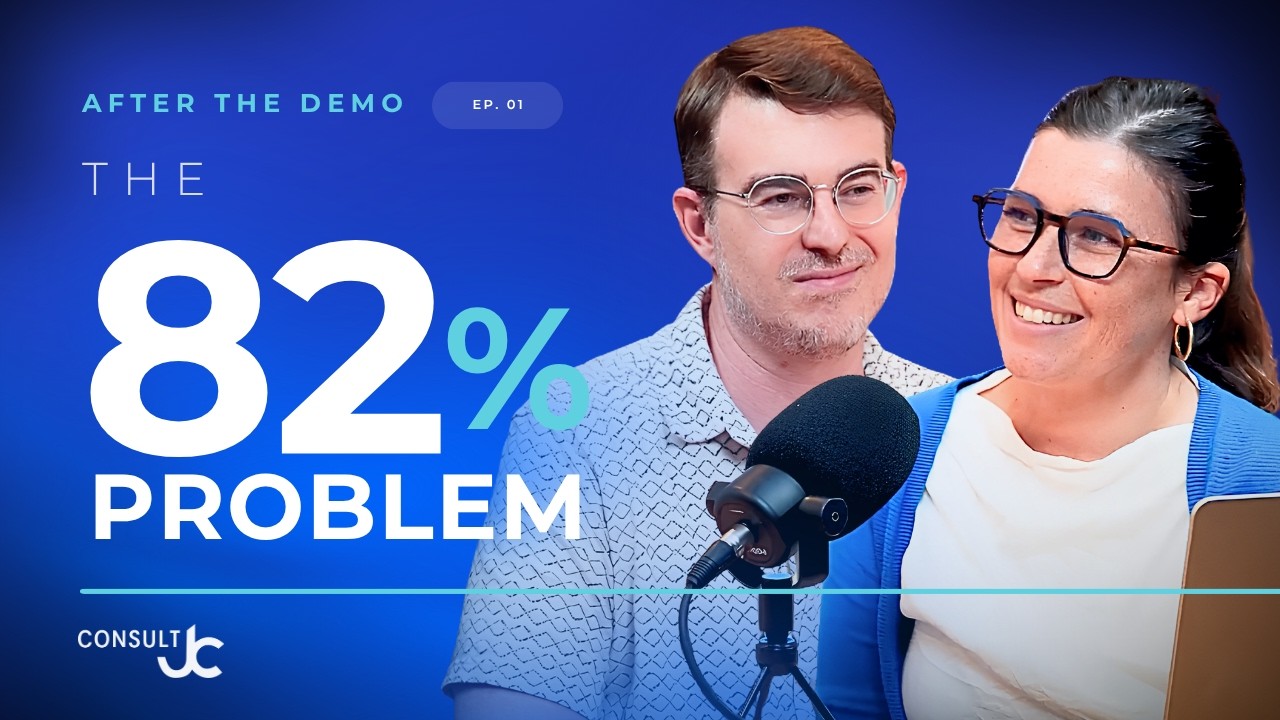
After the Demo podcast episode 1: The 82% Problem, with Christie and Jordan

On 17 July 2026 we launched After the Demo, the official podcast from Consult JC.

Hosted by Christie Fourie and our CEO, Jordan Cohen, it is the conversation that starts after the screen sharing stops. A software demo shows you what a system can do. What happens next, the planning, the people and the change, decides whether it actually works for your business.

Here is what the podcast is about, what we have covered so far, and where to watch.

Why “After the Demo”?

Most technology decisions are made in a demo. Most technology projects succeed or fail long after it. In our work as a Zoho Premium Partner, we see the same thing again and again: the software is rarely the problem. The process, the people and the leadership around it are what make the difference.

After the Demo brings those conversations into the open. Each episode covers real business challenges, Zoho best practices, implementation insights, AI, automation and practical ways to get more value from your technology. It is made for business leaders who are evaluating Zoho, planning an implementation or looking to get more out of the systems they already have.

Episode 1: The 82% Problem

Our first episode tackles a widely quoted statistic: 82% of digital transformations fail. Jordan explains that the number is real, but it is an average of many different failure patterns. Your own project is not doomed to an 82% chance of failure. The good news is that you can spot the patterns early and plan around them.

Christie and Jordan walk through three of the most common patterns:

  • Tech first, process after. A system is chosen for its features, or its price, before anyone maps how the team actually works. Months after go-live, a sales team that sells across regions and product lines finds the CRM only fits one process, and the software gets blamed. The fix is proper discovery with the process owners in the room.
  • Champion-dependent failure. One person drives the whole project and holds all the knowledge. When they leave, nobody knows how the system works. Involve more people early, invest in training and documentation, and bring in extra internal champions from soft launch and user testing onwards.
  • Technology before change management. The dashboards are built and working, but leaders go back to their spreadsheets. Treat adoption as its own project phase, give a leader ownership of it, and keep it on your meeting agenda.

Jordan closes with a simple exercise any leadership team can do for free: block 30 minutes at the start of your project, have each leader write down privately where they think it could fail, then compare notes. Where the answers overlap, you have found the risks to plan for.

Episode 2: Change Leadership vs. Change Management

Why do some transformations fail even when the change management plan is perfect? In episode 2, Christie and Jordan unpack the difference between change management and change leadership, and why successful transformation needs both. They work through three real-world scenarios, the “Wednesday afternoon test”, and how leaders can make change leadership measurable.

Short on time? Watch the clips

Alongside the full episodes, we share short clips on YouTube with the key moments, including How One Person Can Tank $1M Projects, Tech-First Failure: Why You Need to Consider Your Process and The Wednesday Afternoon Effect. They are a quick way to start a conversation with your own team.

Watch and subscribe

You can find every episode of After the Demo on the Consult JC YouTube channel. Subscribe so you do not miss the next one, and if an episode lands, share it with a decision maker on your team. That is how the show grows.

Planning your own implementation?

If you are evaluating Zoho or worried your project could fall into one of these patterns, we would love to help you plan for it up front. Book a free consultation at consultjc.com or email info@consultjc.com.

People first. Systems that scale.

Scroll to Top